Showing posts with label costa rica. Show all posts

Saturday, September 17, 2011

ICADS


Here are some happy photos of my school for the next 5 (+) weeks in San José, the Institute for Central American Development Studies. After that time, since I am in the Field Program, I will be out traveling for the subsequent 5 weeks with a group and coming back to San José most weekends. And then after those five weeks are over, I'll be completing my own project independently, either in Costa Rica or Nicaragua.

At this point it really looks like it could go anywhere, though I'm hoping to work on an indigenous reservation here. Costa Rica is the only other country in the world besides the United States that has reservations for its Native peoples. Another interesting thing is that I didn't even know they existed, because of all Central American countries, Costa Rica has one of the most enduring myths of their land being uninhabited pre-conquest.

It is based on some fact - that there were possibly fewer people here, and also that they had left being less heavy marks on their land (unlike the Aztecs, for example..), so introduced disease had passed through (many Natives having fled to the mountains and forests to save themselves) and the conquistadors eventually came back to check in on the folks they'd met a couple years back, they quickly surmised that no one really lived here. And it's been a strong belief ever since! Sadly, archaeology has a way of digging up inconvenient truths.

But even many contemporary history books still reflect that same fraudulent belief. I'm hoping I could do health or education work - since I think, like in the U.S., there are different programs for different groups, or study the relationships between different Native groups and the Costa Rican government..Too many choices. I'll gain a clearer perspective once I've done more field work though, I'm sure.

Thursday, September 15, 2011

Old photos n' new news


Here are some pictures from our beautiful weekend trip to Manuel Antonio, a beach that is about 4 hours away from San José. The ride was long, full of bridges that crossed giant deep jungle rivers, and other rivers that seemed straight out of photos of the African savanna. But we finally got there, and happily had left at 7am from ICADS - so were on the beach and in the water by 11 am.

The Pacific was so beautiful! The waves were so huge, and so warm! I learned how to swim with big breaking waves and get carried on top of them, and also that if you go just barely underwater when a giant wave is about to crash on your head, it flows right over you without pulling you at all. I learned that after a weary hour of battling against the waves though. I think it's safe to say that this one had never really swam in the ocean before..

After a couple hours I grew hungry though, so went and ate the cheapest meal at the little beach restaurant (Costa Rican traditional food, luckily! Arroz con pollo and lots of beans and salad and salsas). I also got some semi-tropical drinks that I had been joking about with a friend, which were packed with tiny cubed lime bits, and later some more beers. It was just the beginning of the shortest but most soaked-up and appreciated weekend holiday that has ever been had.

I played in the ocean for hours, while friends napped, tanned (it was cloudy - but most of us still came away with a burn), and surfed. Later, when it looked like rain clouds were moving in, four of us decided to go around the beach and explore. Beyond the many stops (for me) to look at all the wild little shells that had washed up on the beach, and for another friend to climb trees and get lost in mangrove forests, we ended up on a giant island of volcanic rock jutting out into the sea, around which the waves were splashing in a very Titanic-esque way.

Despite none of us having shoes, we climbed first to one level of the mountain, then to the next, and up and up until we were at the very top, about 30 feet above the sea. On the ocean-side of the giant cliff, hundreds of deep blue speckled crabs were scuttling to the water. It was all very beautiful, and I'm sad, but also content that I didn't have a camera to take any pictures.

But it did hurt our feet, and so slowly but surely we climbed down. I explored more of the shells washed up on the beach, and we all began roaming in separate directions down the last stretch of sand. While some friends spoke to a local working for a hotel on the beach, I played with the many hermit crabs sneaking along, and just contentedly spaced out, staring at the ocean. Someone has to do it.

After following a river up back into the tree line however, I got called by a friend to go back and see a sloth. It only actually looked like a giant fuzzy peach butt, but I'm happy to say I've seen a sloth sleeping now. It was pretty cute. At about the same time, it truly started to rain, and so we decided to head back. Lightning crashed right behind us after I'd just come back to cover from running to wash one of a coconuts we found off in the ocean. I think convassing this summer has made me immune to the fear of getting struck by lightning. If I look up some statistics I could easily bring myself back to where I was though, I'm sure.

Anyways, when we got back to the hotel, we grabbed a knife and cracked open a couple of the coconuts. It was pouring rain, and I was rinsing sand off myself in the gutter, and hacking at a giant fresh coconut I'd found in the woods with a knife. It was a really great moment. Coconut water itself has a terrible flavor, I personally find, but I chowed down on the fresh insides. The rest of the coconut water we put into a bottle of rum, which was a warm and thick drink. Not as tropically delicious as it sounds. But I've heard that coconut water is incredibly good for you. So perhaps it was healthy.

The hotel served some uninteresting food, but it was easy for us to stay in one place and not have to deal with group transportation yet. Organizing the bill was a pain - it always is with young folx. I'm very seriously considering refusing to eat with people my age and ever share a bill again, because it drives me insane how disorganized and yet rigid people become when paying together. If you're going to be an asshole, pay by yourself. End of story. I ended up getting so frustrated that I payed whatever extra was mysteriously missing and peacing out. For my good deeds and anxiety-caused, excused myself to sit out on the porch with a beer to watch the lighting storm across the beach.

The night that followed was a mysterious and bizarre train of events, leading us from club to club, or rather being led by a suspiciously friendly man one of us had met on a bus. As a group, we ended up doing all the things ICADS told us were unwise (as our parents and common sense have as well - but who listens to those all the time?). However, since we were in a group we also helped each other realize how wild the situation had become. And that was when we ended up in the 3rd or 4th bar, where this man was introducing us to his sister (an old prostitute who was planning on singing us her favorite song), and two friends who had also been following us from club to club. I was watching a doorway, through which I could see a line of women getting ready to go out and find men to buy their time. It was a surreal thing to realize. Especially since the room they were in had a big poster of Snow White on the wall. I remember thinking about how prostitution is legal here, and being undecided about whether I was being an uptight American tourist, or whether this bar really was slowly appearing more and more shady. But it was large, and open, and one of my friends was even dancing with this random guy who had decided he was our tour-guide for the evening.

That was about the same time my plastic chair collapsed under me, which was quite a spectacle. One of the legs just bent and I went sliding across the floor. After that, I didn't feel comfortable drinking or even staying, and since most of my friends were on the same page, we left, though the man ended up following us to another club. I didn't have enough money on me to pay the entrance fee, and wasn't convinced it was worth having someone cover me since I was already exhausted from being thrown around by waves all day. The over-friendly man was talking to the bouncers, trying to translate for us, and told us they were closing in 15 minutes, and that we should go back to the other bar (they were not actually closing for another 3 hours). But he was also being too flirty and too touchy, asking for hugs and kisses, holding my arm to tell me I was beautiful and next thing saying I was his lover and wife - but that's not especially bizarre here I was told. I edged further and further away, told him no, and sorry but "life is rough," to which he responded "but that's how I like it". Aaaand at that point my patience for the situation flipped, and I realized I was being a very stupid young tourist, and we grabbed the next cab - and a couple of the more out of it friends who hadn't made it inside and sat for a harrowing taxi ride up the mountain home.

A good thing too. In the morning my friend Paul (who had stayed in the club for another hour or two) came into our hotel room and told us that when he'd gotten out of the club a few hours later, the man was still there (his friends had been inside), and as Paul got into a cab with the last stragglers of the group, the man grew enraged, demanding money and punching his shoulder. I'm sure there were a million miscommunications that happened. Perhaps, when he first introduced himself, he offered to guide us around. If that was the case, and he'd heard the things we were whispering (to get us out of the sketchy bar faster, one drunk member of our party lied to us about having seen the man's friends knives..), it's understandable that he was upset. It's so hard to gauge intentions, and since I live in a relatively safe bubble of a world, I always forget exactly how much relying on other's better judgment and drinking are two things that really should never go hand in hand.

I spent the rest of the night taking care of a friend who had drank too much, and despite having only had a couple drinks myself, woke up with a terrible hangover the next morning. Going over the details about how stupid we had been didn't make me feel much better. But the nondescript hotel breakfast, accompanied by cups of lovely Costa Rican coffee and then a $10 dollar massage on the ocean did, providing the fastest hangover cure I've ever experienced. The masseuse cracked my back by plucking at the skin around my spine - it was wild. After packing up our rooms, we went swimming in the pool while waiting for those friends who'd gone to a nature preserve to come back. I was happy to have stayed and appreciated the ocean however, and relax more. It was a weekend that gave me a lot of time for introspection, and to make myself content. I certainly left a little wiser to what an idiot I can be (I wonder how I could have forgotten), and also with a clearer picture of why I am here, and who I want to be here, and in general. There's more to it than that, of course - there always is, but that's all for tonight I think! That's my wild story. It's been almost a week since then, but I figured I should write it down so that I don't forget it.

And the moral is not that people should not be trusted. But rather, that going with your gut is not the bad thing to do in most situations, especially at night when intoxicated in a country where you don't speak the language, don't have a cell-phone, and don't even know the name of the street you're on or what's around the next corner. If I were a 200 lb man maybe this would not be so. But that isn't the case, and I'd be an idiot to believe anything to the contrary.

This is all very poorly written.. But I was in the blazing sun all morning watching Independence Day parades, and since have been writing a paper and am really out of it. Oh well.

Monday, September 12, 2011

Sleepy nothing

Upon waking up this morning, I already knew I had a mega-migraine, and resented everyone for existing. It's wild to me how very early in the mornings I can feel such intense hate without even opening my eyes. It slowly dissolves, but never totally dissipates. At breakfast, I think Ana sensed how deeply I was dreading the day ahead, and made extra effort to cheer me up. Which was kind, but I still had dropped my mascara brush on my nice shirt, and ran out of shampoo and conditioner in the shower, so my bubbliness wasn't as forthcoming as per usual. My greatest fear when coming to Costa Rica was the affect that my own cynicism and perma-melancholy would bring to this experience. That I fear my own inability (or ineptitude?) to control my emotions says a whole lot, none of which seems too interesting to write about right now.

To put my mood in perspective though, I've had a very long weekend..

On Friday, I woke up at 6 am and rushed through my morning routine, running up the hill to ICADS with two pastries and a small Costa Rican pear in hand. Our class took a busetta over and through the beautiful mountain ranges surrounding San José and into the foothills, where we stopped first at the finca of Don Enrique and the AFAORCA (Associacion des Familias Agricultoras Organicos de los Cerros Caraigres), an organization of 22 Fair Trade family farmers with small plots of land who farm organic coffee. We learned about how, fifteen years ago when AFAORCA first began to farm organically, there was little incentive from within Costa Rica - and how little has changed, though now more farmers are seeing out AFAORCA's help since their own farms, pastures, and health have been so brutalized by the chemical pesticides that are still legal here.

However, the process of becoming certified organic is an incredibly expensive one for most Costa Rican farmers. The USDA leases out its own name and title to inspectors, who then relay the costs to small landowners. Beyond having to wait two years for the half-lives of most pesticides to pass during which time the sale of ones goods is fairly impossible, farmers must ensure that their land is entirely separated from neighboring lands that may use pesticides. This is extremely difficult, since most farmers already cannot support their families with the income their farms bring in.

For coffee, this created an even larger problem when the United States attempted to provide South Asia with economic stimulus through the coffee bean - destabilizing world markets and causing the price of a 100-weight bag of coffee to plummet. Fair Trade, developed as a consequence of this, certifies that small-farm workers were paid according to set price standards for their coffee, though currently the label is under strain since large agri-businesses such as Walmart have been attempting to grow, purchase and sell fair trade coffee on a much larger scale.

Within Costa Rica, there is very little market for organic coffee - in fact, it is primarily from the United States that this market has materialized. However, Don Enrique and his family support a more widespread network of fincas integrales (comprehensive and self-sustainable farms which provide food security). Don Enrique and his wife live on one of these farms, and we held our next session of the day in one of his cattle pastures on the top of a mountain.

After studying soil content, erosion, and related topics for several hours while clambering up and down the mountain side faster than the cows that live on it, Don Enrique's wife prepared us all a massive and delicious lunch, much of which came from her own garden. When my pictures are finally online you will be able to see her different tank gardens, her bio-fuel pigs, chickens, and her truck-bed manure system. They also live on the top of a mountain overlooking a valley - - all in all an incredibly kind, generous, and beautiful family who have created a wonderful home for themselves.

The harrowing turns down a million mountain sides were lessened on the way back since I'd realized that from my seat I could spot many different kinds of fruit trees. Seeing oranges, lemons, and limes still is so exotic to me, and hasn't stopped being thrilling. More so than the windy roads.

But they were worthwhile, since we ended up at the restaurant where Don Enrique's sons serve AFAORCA coffee - creating and solidifying a market within Costa Rica for the best coffee that has traditionally been exported to wealthier countries. We were shown how coffee roasting works (the difference between a normal roast and a French roast is only a matter of 3-5 seconds!), and how true coffee tasters test the quality of the beans. Much more complicated than wine tasting!

Again, once I upload my photos, everything will be much easier to understand. But it was a wonderful end to the day, even though I'd forgotten my own wallet and went without a coffee of my own. I still had an amazing time, though was completely exhausted by 7 pm when I finally arrived back at my home.

It's funny - the exhaustion of traveling is easy to parallel with the exhaustion of mono that I suffered from my second year of college. As soon as I come home, waves of tiredness wash over me. Some nights it is easier than others to keep my eyes open - some it's not even worth the struggle. Usually Ana saves me from my blank stares at the unfamiliar shapes of words in my tareas, and I can sit still and eat delicious food and avoid thinking about the work that remains. The family comes and goes in the kitchen, at a slow but erratic pace that easily entertains.

Friday night, Rosie and I spoke in greater detail for the first time, and I learned more about the five orphans she was going to visit. She shared with me their deeply sad story, which shook me more than anything else here has. They are the children of two families of abused women whose father's have both committed suicide, and two young siblings from these families have also died in recent years. The mothers are very poor and live with their own grandmothers, and the children have little access to school (since it is two hours away, and for one family the four children's only option is to herd cattle or pile on to their deaf and mute aunt's motorcycle). Rosie is their godmother, I believe, and told me she wants to bring me someday soon.

Rosie also told me that I am a good ICADS student - though she phrased this by stating that I am either the 10th student they've had, or that this is their tenth year hosting a student, and that I am high on the list of favorites. After a week, I'm happy! What accolades! I'm well on my way to becoming these two ladies best-friend-for-life. It is interesting though how I feel like I'm swaying from being treated like I am in a bed and breakfast (and a part of the income - which I am) to being just another body in the busy house of my hosts.

I am so tired! I have so much work I should do, I can't write any more..this blog post wasn't very interesting at all.. Oh well, next time! I had a wild weekend that will blow your minds, so in anticipation for that - and the beautiful photos I have stored up, goodnight.

Oh, here's a picture of me happy on da beach taken by a friend who's put up her pictures!

Thursday, September 8, 2011

"Put on your ponchos"

With the amount of reading that I still have for tonight, I really should not be writing right now. But I'm very sleepy (it's only 7:30 pm) and feel that, despite how interesting I find the agricultural infrastructure of Costa Rica and its main exports (in case you're questioning me, I'm being very serious), this is a better way to spend my time. At least for a little while.

Tomorrow I have to wake up at 6 am, which seems insane despite the fact that I normally am up and restless by 5 am. I think that's due to a combination of me not having entirely adjusted to the (only..) 2 hour time difference, my anxiety about sleeping through school (I have zero alarm clocks or watches here in Costa Rica, and have not had the chance to go shopping yet for a really sexy digital watch), and the early-onset of crazy bus traffic at 5 in the mornings here in San José that gets me out of bed at 5 am.

Anyhow, I have to be at ICADS at 6:50 am, since we are going to the organic coffee farm/commune, and later some coffee roasters! Maybe I'll buy some organic Costa Rican coffee to bring back home...We'll see how generous I feel (Vamos a ver!), or rather, whether I don't use it all before returning home.. Then, from what I've gathered, we will then be climbing high into the mountains surrounding San José to do some soil analysis, and to experiment directly with this country's laws on agricultural growth. Basically these serve to control large and small scale agricultors and prevent over-development in areas that have limited capacity to sustain farms of various sorts.

As I learned only a moment ago, the Food and Agriculture Organization (FAO) classifies these areas (internationally) by their land-use potential into four separate categories: Intensive Use (can produce high yields with modern technologies of crop production), Extensive Use (can produce moderate yields per hectare), Forest (best used for timber production), and Very Extensive Use (best used for watershed protection or low-intensity animal and timber production). 21% of Costa Rica is type I, 30% is type II, and the remaining land is type III+IV. Which looks a little like....this:


Farming Systems
3. Coastal plantation & mixed
7. Extensive mixed (Cerrados & Llanos)


http://www.fao.org/countryprofiles/Maps/CRI/01/fs/index.html

Today we were given a lecture by David Norman, resident biologist who, according to the ICADS website, "in the late 1980’s came to Costa Rica to help set up the region’s first wildlife management master’s program". David also spent time in his youth volunteering on Isle Au Haut in Maine, and knows Acadia and Baxter State Park very well. David told us all about, in sweeping terms, why Costa Rica is the way it is, in terms of geology and weather. Taking me right back to my only science classes before high-school, we discussed plate tectonics and how Costa Rica was actually formed when South America moved away from the plate of Africa (80 million years ago), becoming an island that began to develop unique biodiversity and eventually began to subduct underneath the Caribbean plate (65 million years ago), which led to the earliest formations of the isthmus and the Greater Antilles mountains.

Only 15-16 million years ago did the archipelago of mountain tops begin to rise out of the water as more subduction was occurring. For many thousands of years however, they had served as private incubators, giving genetic isolation to species which allowed (as David noted - the Galapagos and many other similar cases teach us that this can be a crucial step in evolution) unique adaptions of species to colonize land without much inhibitors, leading to "greater acceleration of speciation".

Many of the mountains that therefore were created through plate tectonics are in fact volcanoes. Surrounding San José there are many, and most Ticos (the local name for Costa Ricans) will tell you that there are 125 active volcanoes here. Some that overlook the city are still very much active, and David told us that later in the field course we will be ascending into one or two of these active volcanoes. So active, apparently, they make you park your car facing the road - just in case you need to jump in and drive down the mountain dodging magma.

There is a funny story here about the first time in many, many decades that a president of the United States visited Costa Rica. The year was 1963, and the volcano Irazu had been dormant for many centuries. It was John F. Kennedy's choice to plan a special visit to the country, however, on that day the volcano erupted for the first time in living memory - and has not stopped grumbling since.

But for me to grumble on about the trade winds and precipitation does not sound like a fantastic time for anyone except me. BUT FIRST, picture this: in some areas of north-eastern Costa Rica, one cubic foot of land receives roughly the same amount of rain in a year as two large Victorian bathtubs! Nuts.

David moderated some discussion later, which
was essentially an open dialogue in smaller groups about our experiences here in Costa Rica. I felt like I was telling a strange dream when trying to describe how different my home and family are here from anything I've ever known. Still such an amazing experience. But while others spoke of how they have been feeling extremely at home here and as though their lives have remained relatively similar despite having switched countries, I couldn't help disagreeing almost entirely about my own experience. It's not that I am unable to relate to the family I am living with, or that their lives are so drastically different from my own or anything I expected, however I am acutely aware of the differences. I found it approx. 175 times harder to relate to my home, family, and friends in France when I first arrived at age 16 than I do here, and it is a million times more unfamiliar. Lots of numbers that aren't really based on anything, but the point is that I am so happy that I am noticing these differences, and that I do not resent those that creep up on me and catch me by surprise. I am ready for all of them, and am glad to meet every single one! I am the ultimate guest-house. A hotel. Since I passively dwell on this Rumi poem casi todo los dias de mi vida, and y'all might not have caught the reference, here it is:


This being human is a guest house

Every morning a new arrival.

A joy, a depression, a meanness,

some momentary awareness comes

as an unexpected visitor.

Welcome and entertain them all!

Even if they are a crowd of sorrows,

who violently sweep your house

empty of its furniture,

still treat each guest honorably.

He may be clearing you out for some new delight.

The dark thought, the shame, the malice,

meet them at the door laughing,

and invite them in.

Be grateful for whoever comes,

because each has been sent

as a guide from beyond.


I'm going to a beautiful beach 4 hours away with amigos for the weekend, and am not sure when I will next write, but am going to begin taking photos tomorrow! I'm such a lucky girl. I don't even know how to deal with it, beyond soaking it up as much as I can. Which is part of the reason I have not been taking photos - it always seems to kill the moment when I put the screen (digital) between me and whatever I am doing and suddenly picture how others will potentially view my photos, and how I should present what I'm experiencing to the rest of the world, and what is impressing me so much so that I had to pick up my camera in the first place. Tomorrow, though, definitely. Now it begins.

I didn't even write about my many delicious meals today! What we ate for lunch benefited a local organization that is raising money for its free daycare for very poor working women who have infants - an organization that has worked closely with ICADS in the past. And it was delish. And tonight Ana made me my first fried plantanos here (I'd had a couple in a restaurant here - but these were the first freshly cooked!). Also, for breakfast she's been giving me thick tortillas made of corn that are like my food dream come true. You eat them with rice and beans (gallo pinto, again), and queso blanco (sour cream!), as well as whatever other fruits Ana tries to make me eat up.

Anyways, good news is that I've figured out which cheap Costa Rican beer is the best - of the two. It is the Imperial - and now I am set for the rest of my stay. It's really wonderful to be able to go out with friends in the late afternoon, get a nice beer for about a buck, and go home without having to think once about the fact that I am still three months away from being twenty-one. Today one of my classmates celebrated her 21st birthday, and it was even funny since it was so unremarkable to celebrate here - twenty-one is just another year, of many, here. A mi me gusta muchos.

Pura vida!! (an expression which is used in Costa Rica in essentially all circumstances to say something which basically means "Hey! You're awesome, and life is awesome!")

Wednesday, September 7, 2011

Mesothés

"We live like in jails. We live behind bars. We don't feel safe in the street; we all have insecurity. Honest people live behind bars, and the not honest people live outside of them." Javier Arguedas

It has been only a day and then some since I wrote my second blog post, but I already feel like an overwhelming amount has happened and that I am being bogged down with new experiences to share, and to reflect on.

Yesterday, four other ICADS students and I ventured into the big city of San José. Before I came here, I, and most of the other students were warned that San José is the ugliest, dirtiest, and most dangerous city in Costa Rica. All those things are probably true about it, but I still love it. I've never been anywhere that has more buses and cars rumbling and beeping, and more exhaust hanging in the stale valley air, or seen more people at bus stops and walking everywhere, or more women in precariously high heels and boots and young men in dress clothes.

We were given a map of San José, and on a separate sheet of paper a list of things to do that would offer us some practice in the basic skills we'll be using to survive in the city over the next 4 months. Fairly easy to understand the concept; however, the biggest thing impeding our way to getting the checklist done and having our school day be over was the fact that the ICADS school isn't actually on the map, and we had no idea how to get from off of the map onto it.

Because I vaguely remembered one of our instructors mentioning we could get onto any bus in any direction and it would take us to San José, and we had no other solid ideas (and the people we asked for directions did not know what name of the street they were on - apparently San José has no real street names or numbers. Try figuring out how that one works. I can't.) we got on a random bus which did, eventually, take us right into town!

We wandered around several central plazas, awkwardly asked for maps at a couple tourism offices, visited an internet café, and gained a semi-solid understanding of how the center of the city functions. There are lots of people, many of whom are clearly very poor, peddling lottery tickets, and umbrella as soon as the tropical rain begins to pour down.

Luckily, by the time it really began to thunder, we were already in the Mercado Centrale (picture an indoor market with a maze of stalls that sell everything from tanned leather to ground coffee, baby hampsters to sage bundles, octopus to chicken feet, and throw in some open-bar restaurants full of happily eating ticos (Costa Ricans!)). There we diligently followed our sheet, asking fish vendors whether they sold tiburon (shark) and whether their camaron (shrimp) are farmed or come from the wild, vendors of traditional herbal remedies (picture a stall entirely covered in bundles of moss, bark, and herb bushes) whether their products are local, and fruit sellers what the strange fruits they sold are called, and how to eat them. It was actually all very embarrassing, but we ended up finding a place to sit and get to know each other, while eating huge piles of delicious arroz con carne con gallo pintos y salsa fresca (rice and meat all fried up with spices and veggies, served with Costa Rican beans and fresh salsa that has been heavily doused in lime juice and cilantro), and fries (the worst part!) for muy, muy barato ( so cheap! Only 2,500 colones which is about $5 dollars here!) So delicious, no wonder I can't stop eating here! It's all so good! I'm glad my parents raised me on Mexican food, or maybe I wouldn't be so in heaven right now.

After the meal, we wandered around San José a bit more. At my request we roamed into a nearby open church, which I regretted immediately since it was much more full than most large churches at home are on a normal weekday at 3pm, and most people were praying (some out loud), and it was clearly not a tourist area. After some more walking, we took a cab (they cost so little here!) and got to experience more terrifying San José driving. We were joking about how easy it must be to pass drivers education here; basically you just get in a car with an instructor and go blind to all other cars, bicycles, and motorcycles around you and drive as fast as you can, begin use your hands as turning signals to let other cars know they need to move because you are cutting them off and will hit them if they don't, and somewhere in between those difficult activities try and hit all pedestrians crossing the street. Oh, and only turn on your turn signal when you are already turning, but only if you feel like it. And red lights? Those are for pussies.

After getting my bag at ICADS, I went back to a bar next to the engineering school (which might be a high school) which neighbors our own, where we watched the Costa Rica/Ecuador soccer game and relaxed as a group. We took our first group picture, and I drank my first beers of the trip, which were not actually Costa Rican. They have two native Costa Rican beers, but I blanked while ordering and drank some Stella instead. Better safe than sorry when you're exhausted and just want to drink something you know you like.

Despite having eaten an immense lunch, I had a huge dinner when I eventually arrived home. It was only 6pm, but it always feels so late! Right now it is only 7:45 and yet I feel like it's 10 or 11pm, and will probably end up going to sleep within an hour. Anyways, over dinner I got to know my host mother Rosie a bit more, and she is hilarious! I told her about the vague plans my ICADS friends and I had to go to the beach for the weekend, and she said if it didn't work, this Friday is Children's day in Costa Rica and therefore this Sunday she will be taking five orphans to the beach all day, and that I was welcome to come! So sweet, but so mysterious! I haven't sat down with her since, but I do need to ask her why and how she is involved with five orphans. After dinner I tried to do the many pages of reading I had left for me in preparation for today (Wednesday!)'s lecture, but only got a quarter of the way through before realizing how pointless it was.

I don't know if I have the patience to write about everything that happened today, after all this writing about yesterday. But I'll write an abridged version..

So, the first big exciting thing that happened today was that I finally figured out the electric water heater, meaning I had my first warm shower in Costa Rica! I already hate showers and bathing (don't get me wrong, hygiene is rad - just getting wet is a drag), so I didn't really care and didn't think much of the ice cold showers. Showering was just as unpleasant as it always is, just a lot colder. But today, all of a sudden it was warm! It was pretty wild, if I do say so myself.

At school, lessons were long but my Spanish teacher is muy divertida so it's alright. She accused me of having the photographic memory of an alcoholic because I could remember the word trago from the beer list last night, but can't seem to remember the word cerca (close). Her humor is much more personal than any teacher I've ever had, but at the same time I know very little about her, beyond the fact that she is an excellent professor.

After lunch, our class got two lectures; one, from the director of the program, Anthony Chamberlain, and the following from Javier Arguedas, who has worked closely for the Supreme Court, and is getting his doctorate in Political Sciences here in San José. It is his quote that I put at the beginning of this post, which refers to the iron fences and barbed wire that surround every single house in San José, and that are very normal to most Costa Ricans, but which I find frightening despite their brightly colored paint. Anthony spoke to us about the transition between orientation, and the beginning of our studies of Latin America. He also said a couple quite nice things which I jotted down, my favorite being: "experience without reflection is tourism".

Javier Arguedas spoke with us in greater depth about Costa Rica as a country of contradictions. One of Aristotle's philosophies, of "Mesothés", means almost having met success. It has also come to be known for its inverse, having almost been doomed to failure. As Arguedas pointed out, this is exactly the case for Costa Rica: it is widely hailed as the greenest and happiest country on earth, however it is also the country with the most pesticides used per hectare ( about ~57 liters for every 3 acres) and the 2nd most polluted river in Latin America. This is in a country the size of Virginia, which coincidentally harbors over 6% of all the biodiversity in the entire world! Costa Rica is one of the world's largest producers of desserts, supplying coffee, cocoa, pineapple - and yet it has almost no food security within its own borders, relying heavily on outside imports for basic necessities.

As Arguedas described, despite Costa Rica selling itself to tourists (especially eco-tourists here to see the verdant jungles) as having "No Artificial Ingredients", "Another phenomenon we find here is the poverty that affects the very young and the elderly. At best, we see children selling candy and chicle in the street; at worst we see them selling themselves to tourists." Arguedas argues that the only way to understand a country with such contrasts is by understanding the history that has shaped them. Since I spent the majority of my mornings this summer reading about the history of Central America for this exact reason, I was delighted to hear his lecture.

Though I won't go into the entire history of Costa Rica, here are some fun facts for all you no-nonsense neoliberal Americans who might come across this blog. Did you know that:

  • Costa Rica never won its independence, but rather, as Arguedas described it cutely, "We recieved a note telling us we were independent, and we did not know what to do with it. We decided not to do anything, and to let the clouds pass."
  • In order to show its unique stance in Latin and Central America, Costa Rica was the first country in Latin America to write its own constitution, called the "Pact of Concordia", which was one of the earliest constitutions to recognize and be built around the importance of peace.
  • In the year 1940 (roughly) Costa Rica got rid of its military (and was the first country ever to do so), and poured that money into its education system, creating an "army of teachers".
  • What money did not go to education was channeled into the welfare system, which worked to solidify a stronger and larger middle class and create greater social equity.
  • The second constitution in Costa Rica, also written in the 1940's (at a time when most of Central and Latin America were being controlled by imperial and/or military regimes), was based on principals of solidarity, social justice, and democratic respect and participation.
  • Taxes paid for a wide-reaching welfare system that provided all citizens with basic necessities, i.e. access to education (even higher education) for free, medical and health coverage, loans of money and land to start businesses and farms.
And though this may seem like a fluke, communist, or entirely unstable, this welfare-regime lasted for 40 years, until pressures from the United States forced Costa Rica to sign the Central American Free Trade Agreement and to re-privatize the public sectors. As Arguedas pointed out, when the welfare regime ended, Costa Rica had a society that had equity levels next to those of Scandinavian countries, but now, more than 45% of homes here live without the income necessary for basic survival on a day to day basis, let alone live comfortably.

Arguedas ended his lecture stating that capitalism and democracy do not go hand in hand, and that it has been proven time and time again that capitalism exacerbates social inequalities and extreme poverty. Costa Rica is now just one of many examples of this across the entire world, of countries which serve as resource platters for those who have enough money to buy themselves food and security. Arguedas finished by saying that, "Peace is not defined by the absence of war, but as the ability of all to live with dignity".

I was fascinated to learn more about the deeper economic history of Costa Rica - a subject that has been interesting me more every day, particularly in relation to the economics of the environment/environmentalism. But I was disappointed with the end of Arguedas' lecture, as I believe it left the ICADS students more frustrated than inspired. Not that he came to inspire us, but I learned so much through him, things that I did not know were possible for a country to ever achieve, and left with a much more deeply felt admiration for Costa Rica and its citizens. There is so much to be learned here, and to hear my fellow classmates talk about "how depressing" the lecture was leaves me wondering whether the real message was not gotten across. Of course capitalism is a huge fish to fry in a 2 hour lecture, and Arguedas is most likely exhausted by this country's past and its inability to resurface in the more conservative present of modern-day Costa Rica, but I cannot help feel that for such a small country with such a unique history to have made such progressive and successful strides towards ending poverty, illiteracy, and ill health cannot be taken so lightly! Of course the 40 years ended, and there are other very strong forces that came into play that I am choosing to omit from this post - but there is truth in my strong emotional reaction that gets precedence here, though no where else!

But even getting 'depressed' by the lecture shows a strong, passionate reaction to what we learned, and I just hope this allows those students to access their own knowledge and the knowledge of our professors and teachers of all forms differently than I do, and perhaps react to it uniquely, in the end providing something that is less disappointing to me and much more eyeopening. So maybe that wasn't so bad of a reaction after all, but I should just let everyone feel their own way through these next 4 months without expecting them to share the same levels of shock and awe as I.

Anywho - - - many thanks to Arguedas for making this blog post possible. If you ever Google your name, how embarrassing. I apologize for rambling! And to all those questioning this information, feel free to open Google and learn about it yourself, or check out "Rise and Demise of the Tropical Welfare State" in Peasants Against Globalization from your local library.

**I realize that I've left out what I learned about where & what I'll be studying later in the semester. I guess that will just have to be a surprise, since it's all too good to write more about now!

Monday, September 5, 2011

Costarricense

-"Crear una mayor sensibilidad a la cultura latinoamericana, especialmente a la costarricense, y valorar las diferencias culturales"

From my green bedroom right next to the noisy intersection, I was shocked to find an open wireless internet connection named "the Vitamin-E Project". Though it slides between being one or two bars of connection, it is faster and more reliable than the days of yore of dial-up. Using it brings me more than a little grief though, as I don't know whose connection it is, and whether I should be paying them for its use. Just another pequeno cultural difference plaguing my mind. Does it belong to my host-family? Am I racking up their bills as I translate every other word from my tareas on Google translate?

Yes, I am going to include Spanish palabras in italics, just because I can.

The baby kitten just wandered past my room into the dark hallway. I still can't seem to figure out where it came from, and why everyone is so blasé about the tiny baby walking around underfoot.

Today was such a big day! I had my first day of school, and felt like a toddler as my 17 year old host-brother walked me along the busy street to the ICADS head quarters. For those who don't know, ICADS stands for the Institute of Central American Development. Another classmate, who is from Chicago, lives next door to me, and I later found out that there are many other students in the surrounding area. Mi hermano accompanied me to the door of ICADS. The walk was mostly silent with some awkward smiles; he says he really loves to caminar and laughed and said that it was not a problem when I told him "lo siento, mi espangol es la mierda".

Of course it was even more awkward between the students when we first arrived; no one spoke much except those who already were familiar. A shocking amount of people doing this ICADS program are from the mid-west - never have I seen so many people from Michigan and Maryland and Wisconsin out of their home-states. And they all seemed more confident in their Spanish than I am, but that didn't bother me as I've got an over-abundance of confidence in French, which is only serving tripping me up. Or maybe not, more on that later.

After a round of introductions, we were divided into small groups: a theme for this entire program and the next four months of my life. We were given a tour of the ICADS facilities, which are beautiful! Small, but with beautiful gardens in the center, and patios, and tiles and windows everywhere. Everything you could dream your Spanish immersion classroom would have! Plus endless coffee, which is helpful since I haven't been able to stay awake or stop eating since I arrived. Which is only a slight exaggeration.

Soon we reassembled as a class for more information, then gradually were taken out by our Spanish professors for individual interviews. Though I was fairly nervous for mine, it ended up being very funny. My interviewer applauded my ability to speak French without realizing it, and she somehow managed to piece together a relatively accurate portrait of my life. In the end, I was placed in a Spanish class that has only two (!!!) students (which compared to the more customary 3 or 4 is not a huge change), which we think has been formed specifically for the two students who speak the most French. And I couldn't be happier to have such a small class! So much one-on-one time!

Since we'd spent the majority of the morning already working out logistics, we only had about an hour of Spanish class, during which time the professor made me ask my fellow classmate questions and vice verca. He's from North Carolina and goes to a liberal arts school in Florida, and has spent a lot more time traveling in South America than I. However, in the short term I seem to have an upper hand in understanding Spanish thanks to my French. So far I've been able to understand almost everything when spoken to, except for when my host brother (who mumbles a little) tries to communicate with me, which makes me feel pretty bad. I need to understand more!

But it was exhausting to speak, even for an hour. I don't know how I'll manage classes from 8 am to 12 pm, every day! And that is just including the Spanish. Also, my professor is fining me for every time I crack a knuckle. She already has made ten dollars off me. ABSURD.

By the time lunch came around I was starving. We all went out to eat, and I got to know the student from Hampshire College who is doing the same program as me. She's very cool, and I'm sad she doesn't live closer to my own house here in San José! Oh well! I'm sure that won't be an issue. Today we all went to the bank and exchanged our money, and tomorrow we are being sent out in small groups to explore the city and complete a treasure hunt! What a crazy way to discover such a crazy city.

Later in the afternoon we received more information about what we will be studying this semester, and where we will be going on outings and longer trips, and what guest speakers we will have. I leave for Nicaragua in under three weeks! And everything looks so amazing! The speakers are all fantastic, and the outings sound incredible. For example, this Friday we are going to an organic coffee growing commune (for real!) and a small-scale coffee roasting facility!

I forgot to mention in my first blog post - there are low-lying coffee bushes growing everywhere here! And everyone drinks coffee all the time! I am in heaven.

It's the rainy season here, so afternoon courses were interrupted by clashes of thunder and lightning, which no one seemed to blink an eye at except for me and another student who lives close by. Tomorrow she, the girl from Chicago, and I are going to walk to school together. Big girls walking on their own to los classes! No, but in all honesty walking along the side of the road here (in daylight, even) is extremely scary - cars zip by and pay zero attention to pedestrians, and there aren't really stop lights or crosswalks. The best bet when you've decided you want to cross the street is to wait for a bus to pass, since buses only go straight and down turn on the side roads we have to cross. And there are many, many buses.

Today, when walking home in heavy rain, my host brother and I had to stop on the sidewalk before side-stepping to avoid puddles to insure no cars hit us. And the cat-calling culture is even more intense here than in the United States: even though I was walking with my host brother, and was wearing jeans and a sweat-shirt, I was hollered and whistled at from cars and by men standing next to me on the street. Excuse me? No buenas dias for you, sir.

Anyways, it has been a very long day so I will wrap this up. I hadn't even intended on writing again, but felt like it. When I got home I hung my shoes up to dry, and went through my homework highlighting all the words I don't know yet and adding them to my big list of vocabulary words written in funky highlighters to make learning less of a chore, but more difficult to read. I had dinner with my host mother, who is, in fact, Ana Fallas, not Rosie. I met Rosie later this evening - turns out she had seen me passed out yesterday afternoon and though it was too cute to disturb. Ana made me an amazing salad with giant slices of avocado, tomato, and little quail eggs, which she wouldn't stop pressing me to eat since I told her I adore avocados. There was also rice, and a yummy pasta dish. So much food! She also made rice pudding later, which made me melt with happiness. Nothing makes me melt like rice pudding.

I felt much braver about my Spanish after a day of rattling on class, and spent most of the meal trying to describe more personal things, such as how much I had enjoyed playing with Triné when I first arrived and practicing my Spanish with her, how important it is to me to speak many languages and how I come from a family that speaks many languages, and how happy I am that there are ICADS students near my home who I can easily go out with at night and on weekends once I know the city better. I am so grateful that she is so willing to work with me to understand me! I hope (and suspect) she finds it pretty amusing, though.

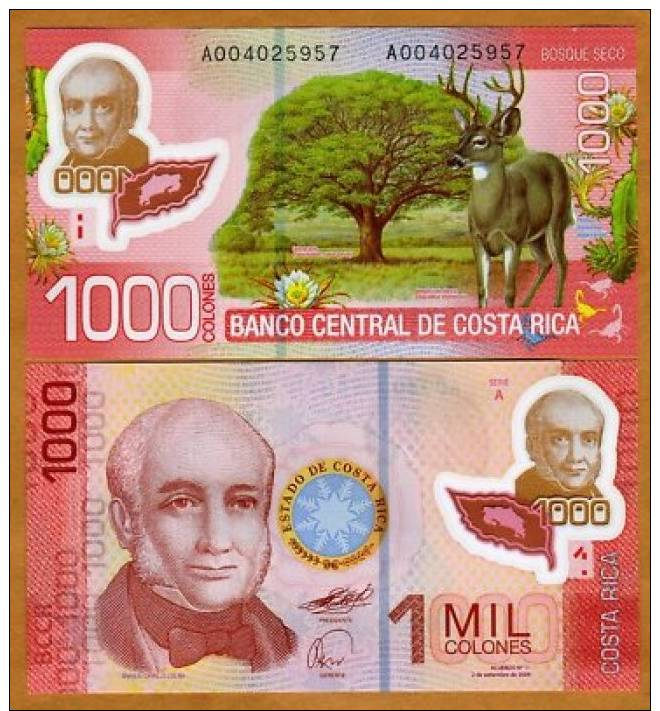
I have a lot more readings I should work on tonight, but I am exhausted even though it is only 8 o'clock! Or at least I suspect so. I haven't figured out the time difference or whether my clock on my computer is wrong. I am also trying to upload a photograph of the money here - it's like a jungle safari! Everything is bright colors and covered in animals. Since my internet isn't up to uploading these photos, I suppose I'll make do with a Google image. On these notes - buenas noches!


Sunday, September 4, 2011

El premier dia en Costa Rica

I suppose there is no better place to begin this blog place than where I find myself now, in my own bedroom in Costa Rica. Painted in a palette of different greens, the walls are made of wooden slat, and the pillow cases, table cloth, window shades, and dust covers over the shelves for my clothes have been sewn by hand by a member of the host-family I am living with.

The Fallas family live in a large home (which I have been told is very traditional) that opens into a parlor entryway, but is quickly followed by several small twists and turns, leading to the large kitchen where one finds a tree on which one hangs plantains and other fruits, and an inset tile counter in the wall where vegetables where being sliced for the insalata when I first arrived.

From there another doorway opens into a much larger area that has been built into what looks to be a warehouse, where on the ground level one may access private bedrooms, but in the open space outside there is laundry being washed and hung, and food being cooked on extra heaters, and where the skeleton of the second (and third?) floor, as well as their seamstress shop are visible. The house is full of plants, people, and the occasional lost baby kitten.

When I arrived at the airport in San José at 9 am this morning, I was still fairly overwhelmed by the huge undertaking of living with a family and learning Spanish that I had set in front of myself, but was also beginning to get excited at well, the endless possibilities that lie ahead of me. During my flight, when I was not in a deep sleep, I was going over combinations of Spanish vocabulary in my head, picturing every possibly situation and how I could patchwork my way through to communication.

What distressed me most was not how limited my vocabulary was (IS)- but rather how I'd suddenly find myself speaking in French. This will probably be a wonderful crutch for my to use as I stumble through learning Spanish, however it is embarrassing to find myself saying "Ah, bon!" instead of "bueno" or "muy bien", and every other French phrase that jumps off my tongue.

I'm getting ahead of myself though. After getting lost and resorting to stalking my flight attendants on their way to immigration and baggage claims, and getting taught some basic Spanish by my immigration officer, I finally got out of the airport. My driver, Don Fernando, took a while to arrive, during which time I was approached by many English-speaking taxi drivers and tour guides who literally needed to be convinced I did not need a ride anywhere.

But waiting for Don Fernando was worth it - even though all I was brave enough to say was "Si!" and "Oh! Es muy bonita!", or repeat a word I didn't recognize in a timid questioning voice, he steadfastly kept on describing the scenery. Here in San José, we are surrounded by (huge) mountains, volcanoes, and the ocean, and the highways are filled with flags for the upcoming independence day. Along the highway, I was surprised to see many people were walking on a foot path that had been carved side of the route, the majority of whom were well dressed in pressed white shirts and slacks.

Don Fernando asked me whether I had siblings, and told me about his own family. He told me that families in Costa Rica are very important, but that they are also very poor. Somewhere along the path of being proud I had managed to pack so little in my bags, I did forget to what extent Costa Rica is still in "development" (into what remains unknown), or in other words how poverty is much more evident here than in the United States. Rather than being hidden from view or overwhelming daily life however, it is lived along side of, with people actively working to better their lives. Which sounds pretentious coming from me, but it is just a first observation, and over the next couple weeks and months I'll think more about it and let you know if I was just being a patronizing traveler or whether it's accurate.

After dropping me at the home of the Fallas family, I was given a brief tour of the home by Rosie Fallas, who then went back to cooking. I shyly went and sat in the living room with the little girl who was watching TV. Triné (which I don't know how to spell), is three and a half, and was also fairly shy at first. Instead of talking to me she started giving me a performance of her gymnastics skills, rolling around on the tile, and throwing her large life-size-Patty Play Pal-reminiscent doll around. Her mother came over and made fun of her, saying how much she loves to chat, and then encouraged Triné to show me around.

I spent the next few hours getting a very in-depth-tour of all of Triné's hand-me-down toys. We spelled things out on the floor with little foam letter puzzles, made faces on the floor with crumpled pieces of paper, went "shopping" with her dusty pink shopping-cart, and cooked up some toy cars in pink bowls her little tin oven to eat for lunch with imaginary pepper and salsa. As silly as it was, I was able to test my Spanish on her and see whether she could (gasp!) understand when I said anything. And she did!! So I spoke more and more, and gradually was able to ask a few questions, and even tease slightly. Yay!

But I was pretty exhausted and when Rosie Fallas came to tell Triné that I needed a break, I was happy to go sit back in the living room for a while. While Triné threw a fit in the other room (screaming for over half an hour because her playmate was gone), Rosie and I tried to piece together an understanding of each other. She has nine siblings, and I am still not sure how many people live in this house, but I believe it's six or seven including her sister, husband, and three children, as well as a host-student. She told me about the studies her children are pursuing, and they themselves arrived home soon after. My host sister is an English teacher for children, and over lunch I asked her to tell her mother that I was sorry for my accidental French.

Lunch was delicious. Of course I am going to have a paragraph just about food. But as some might already know, my diet this summer has devolved from grains to basically only wanting beans and rice. Could not have chosen a better time! We had fresh salad with lime juice, black beans and yellow rice with chicken. To drink was a "leche con crema", which was yellow, thick and sweet milk. Rosie was worried about my lactose intolerance, but I'm probably going to just deal with that and try absolutely everything they'll let me.

After lunch I asked whether "puedo ayudar" ("can I help"), washed dishes, and then took my clothes out of my luggage and arranged them nicely. I lay down on my bed with the only book I've brought, which is three short stories by Faulkner because I feel like maybe I'll be a moe complete person if I read them, and was just beginning to figure out where in the cow-boy story I'd left off when I felt myself drifting off.

My bedroom is right next to a big road on a hill, and the trucks rev their engines to be able to climb to the top, which woke me up periodically through the afternoon, as did the cold (it's surprisingly cool here, and rains once a day!). Despite the stimuli however, I somehow managed to sleep with my sweatshirt as my blanket until 10 pm at night, when I awake with a bang as Rosie tried to put a blanket on me, and scared her breathless. Though I feel guilty for sleeping the afternoon and night away, and also for missing dinner, I have a feeling that she expected as much, and didn't know exactly what to do with me anyways - so having me nap out of the way was just fine. For me, it was the first big sleep I feel like I've gotten in a while, despite it being interrupted by 6 cylinder engines every couple hours.

Tomorrow at 7 am I'll wake up (setting an alarm on my computer was actually the only reason I opened my laptop) and at 8 have to be at ICADS for orientation and Spanish exams. Very excited to meet my classmates, start learning Spanish more thouroughly, and for some classroom structure. And also to explore the city tomorrow! It sounds silly, but everything I write always does.

Buenas noches!